
Introduction
Drummers often search for perfectly matched stick pairs. Many believe identical pitch ensures consistency. The drumstick pitch pairing myth persists across forums and gear discussions. However, achieving true pitch matching remains impossible.
Natural materials inherently vary in density and structure. Even with advanced manufacturing, minute differences remain. This article explains why pitch matching claims fail in practice. Understanding these limitations helps you set realistic expectations.
CUSTEAM maintains transparency about manufacturing realities. We focus on achievable quality standards. You will learn what manufacturers actually control.
What Is Pitch Pairing?
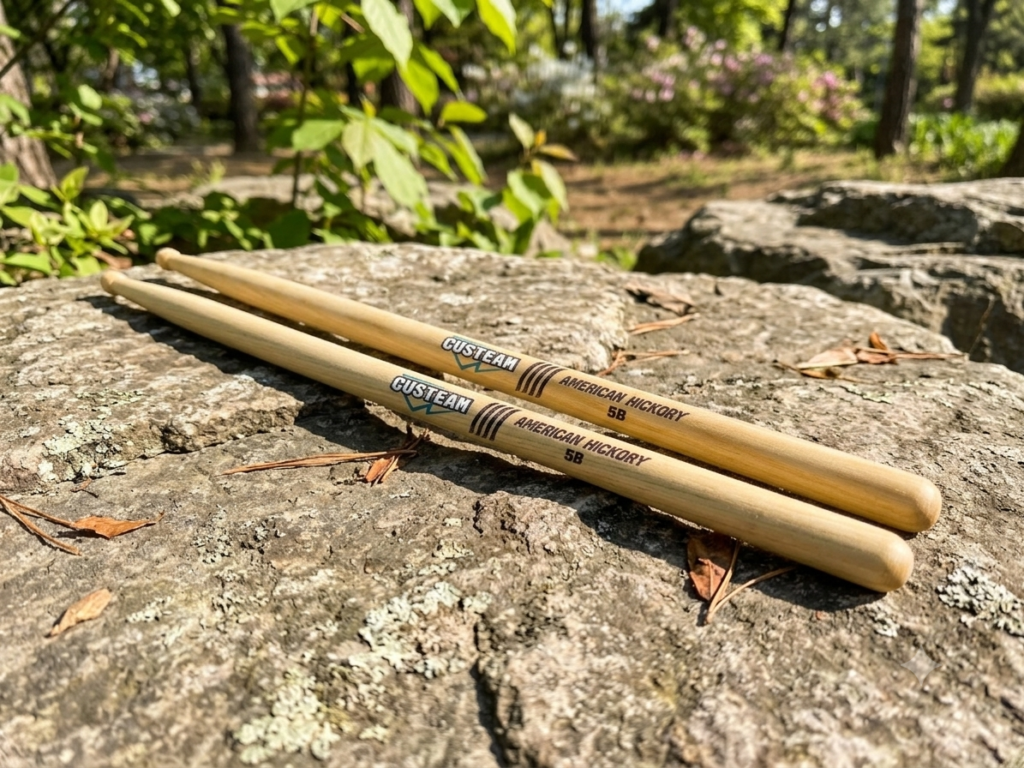
The Concept Explained
Pitch pairing claims match sticks that produce identical sound when struck. Manufacturers tap each stick against a hard surface. They then group sticks with similar pitch together. The goal creates matched pairs for sale.
This process theoretically ensures consistency during play. Drummers expect even response from both hands. Manufacturers market this as premium quality feature. Many players willingly pay extra for this service.
Industry Claims vs. Reality
Most companies advertise “precision pitch matched” pairs, suggesting laboratory-level accuracy in their selection process. However, human hearing can detect differences below the thresholds these marketing claims imply. Independent testing consistently tells a different story.
The drumstick pitch pairing myth originates from marketing departments. It sounds impressive on product descriptions. Actual manufacturing physics prevent true perfection.
Why Natural Wood Varies Fundamentally
Wood Density Variations
Trees grow differently based on countless environmental factors. Soil composition affects wood density. Sunlight exposure creates growth ring patterns. Annual weather influences cell structure.
Even within the same tree, wood density varies significantly. The center of the log differs from the outer edges. Early growth wood differs from late growth. These differences affect sound production fundamentally.
Hypothetical Scenario: Two sticks cut from adjacent board sections. One comes from early growth wood. The other comes from late growth wood. They look identical but sound completely different.
Moisture Content Differences
Wood absorbs and releases moisture constantly. Even properly dried sticks still contain approximately 6-8% moisture. Environmental conditions shift this percentage daily. Humidity changes alter pitch noticeably.
A stick struck at 6% moisture sounds different at 8% moisture. Seasonal changes affect this dramatically. Your home humidity shifts pitch without warning. No manufacturer controls post-purchase environmental factors.
Growth Ring Patterns
Growth rings create structural patterns within wood. These annual rings alternate between hard and soft layers. The orientation of these rings affects vibration transmission.
Sticks cut with different ring orientations vibrate differently. One may have vertical rings, the other diagonal. This creates tonal differences despite identical dimensions. The drumstick pitch pairing myth ignores this basic wood science.
Manufacturing Limitations
Cutting and Shaping Variances
Computer-controlled machines shape sticks with precision. However, tolerances exist in even the best equipment. A 0.001-inch difference exists between sticks. This affects weight and balance detectably.
Tip shape influences attack sound subtly. Slight taper angle changes alter vibration patterns. The drumstick pitch pairing myth assumes perfect machining. Actual manufacturing cannot achieve zero variance.
Finishing Process Effects
Coatings and finishes add weight unevenly. Paint application differs slightly between sticks. One coat may be marginally thicker. This changes resonance characteristics.
Even clear lacquer affects wood vibration. The finish seals wood cells differently. Surface hardness changes with coating thickness. These accumulate noticeable pitch shifts.
| Manufacturing Step | Typical Variance Range | Impact on Pitch |
|---|---|---|
| Wood selection | +/- 5% density | High |
| Lathe cutting | +/- 0.002 inches | Medium |
| Sanding | +/- 0.001 inches | Low |
| Finishing | +/- 0.5g weight | Medium |
| Packaging | Minimal | None |
Table 1: Manufacturing variances at each production stage. The drumstick pitch pairing myth cannot overcome these inherent differences.
These cumulative variances demonstrate why true pitch matching remains mathematically impossible in wood products.
Human Perception Limitations
Hearing Thresholds
Human hearing detects pitch differences of about 5 cents. Most differences below this threshold go unnoticed. Manufacturers often claim pitch matching within 1-2 cents. Such precision exceeds human detection capability.
Furthermore, drumming context masks subtle variations. Cymbals and drums produce complex overtones. Room acoustics alter perception dramatically. The naked ear cannot detect minuscule pitch differences during performance.
Playing Context Matters
During actual playing, stick pitch becomes irrelevant. Contact with drumheads and cymbals completely changes sound. The stick’s natural pitch disappears immediately upon impact.
Drummers hear drum resonance, not stick pitch. The drumstick pitch pairing myth addresses something nobody actually hears while playing. The matched pitch exists only in tapping tests, not real performances.
Hypothetical Scenario: A drummer tests pitch-matched sticks on a practice pad. They sound virtually identical. When played on a drum kit, no perceptible difference exists between any stick pair.
What Manufacturers Actually Do
Weight Matching
Quality manufacturers focus on weight matching. This represents the achievable consistency measure. Weight differences directly affect playability far more than pitch. Most premium brands match within 1 gram accuracy.
Weight consistency ensures balanced feel between hands. This improves playing technique noticeably. Drummers actually feel weight differences before hearing pitch variations. Weight matching delivers real performance benefits.
CUSTEAM matches all premium sticks within 0.5 grams. Our quality control prioritizes this standard. We consider it more meaningful than pitch claims.
Visual Matching
Visual inspection ensures aesthetic consistency. Grain patterns appear similar between paired sticks. Color variations stay within acceptable ranges. This creates perceived value for customers.
Visual matching does not affect performance. It mainly improves product presentation. Customers perceive higher quality appearance. This contributes to pricing structure indirectly.
Selective Grading
Manufacturers grade wood before production. They select boards with similar density ranges. This reduces potential variance significantly. This happens before any pitch testing occurs.
This pre-selection creates more consistency than post-production sorting. Better wood sources reduce manufacturing yield but improve final product quality. The drumstick pitch pairing myth builds on this foundation. The real work happens before cutting begins.
Testing the Myth Yourself
Simple Tap Test
You can verify this experiment easily. Take ten sticks from the same package. Tap each against a hard surface. Listen carefully for pitch variations.
You will detect noticeable differences. Even in premium packages, variations exist. Some pairs match reasonably well. None achieve perfect identical pitch.
Controlled Environment Test
For more scientific results, record each stick individually in a quiet room. Use consistent force for each tap. Record with quality microphone equipment. Analyze the recordings using audio software.
The visual representation shows frequency differences. Even closely matched pairs differ noticeably. Scientific measurement exposes human hearing limitations. The drumstick pitch pairing myth dissolves under scrutiny.
| Test Condition | Perceived Difference | Measured Difference |
|---|---|---|
| Tap test, quiet room | Minimal | Often significant |
| Playing on drum kit | None | Still present |
| Live band context | Undetectable | Still present |
| Studio recording | Barely detectable | Present |
Table 2: Pitch difference detection in various contexts. The drumstick pitch pairing myth matters only in isolated testing environments.
The CUSTEAM Approach
Our Quality Philosophy
CUSTEAM prioritizes what actually matters. We focus on consistent weight and balance. Our specifications exceed industry standards dramatically. Pitch matching does not guide our quality process.
We educate customers about real performance factors. Weight consistency improves your playing. Pitch affects nothing during actual performance. Our transparency builds long-term customer trust.
What We Guarantee
Every CUSTEAM customer receives quality standards focused on what truly matters for your performance.
Weight matching within 0.5 grams ensures consistent feel between your left and right hands during performance, eliminating the subtle but noticeable difference that can throw off your technique and timing.
Visual grain matching creates aesthetic consistency that enhances the perceived value of your instrument investment. While appearance doesn’t affect sound, the pride in your equipment matters psychologically.
Balance point consistency guarantees that each stick responds identically during complex patterns, so you develop reliable muscle memory without compensating for uneven weight distribution.
Defect-free construction ensures your investment delivers reliable performance from the first stroke, with rigorous inspection catching structural imperfections that could cause breakage or inconsistencies.
Sustainable wood sourcing reflects our commitment to environmental responsibility, ensuring future generations of drummers will also have access to quality materials.
These deliver tangible quality you can actually feel. Pitch does not appear on our guarantee list. We do not participate in the drumstick pitch pairing myth. We deliver measurable quality instead.
Custom Order Options
Custom orders receive the same quality standards. We match weight and balance precision across every custom specification. Our team consults on achievable customization options and will help you identify dimensions and materials that suit your technique precisely.
Psychological Aspects
The Placebo Effect
Many drummers swear by pitch-matched sticks. They believe their playing improves. The placebo effect creates this perception. Expectation influences performance dramatically.
Believing you have better equipment often produces better results. The drumstick pitch pairing myth exploits this psychological phenomenon. Customers pay a premium for a confidence boost. The mental edge may actually help your playing psychologically.
Marketing Psychology
Manufacturers understand customer psychology. Premium features create perceived value. Pitch matching sounds impressive technologically. Customers pay more without measurable benefit.
Marketing departments know pitch testing videos appear sophisticated. Tapping sticks on camera looks like a demonstration of quality. Customers rarely test claims independently. Marketing shapes purchasing decisions accordingly.
Hypothetical Scenario: Two identical stick packages sit side by side. One says “pitch matched.” The other says “weight matched.” Most buyers choose pitch matching.
Setting Realistic Expectations
What Matters Most
Weight consistency, balance point accuracy, wood quality and density, manufacturing precision, and a strong durability track record are the factors that actually affect your playing directly. Each of these delivers measurable improvements you can feel during every session. Pitch matching, by contrast, delivers nothing during live performance. Directing your budget toward tangible quality factors is the more informed choice.
Accepting Natural Variation
Wood products contain inherent variation. This represents natural material characteristics. It does not indicate poor quality. Embrace these minor differences as natural charm.
Violins and guitars vary slightly between identical models. The same applies to drumsticks. This does not make them defective. The drumstick pitch pairing myth demands impossible uniformity from a fundamentally organic material.
Industry Transparency
Honest Manufacturers
Some companies increasingly disclose limitations. They explain what they actually control. They avoid exaggerated pitch claims. This builds trust with informed customers.
CUSTEAM joins this transparency movement. We explain our manufacturing processes. We describe achievable quality standards. The drumstick pitch pairing myth receives no promotion from us.
Moving Toward Honesty
The industry slowly moves away from pitch matching claims. Weight matching becomes the new premium standard. Customers increasingly understand real quality differences. Better-informed purchasing decisions follow naturally from this shift.
Conclusion
The drumstick pitch pairing myth persists despite physical impossibility. Natural wood variation and manufacturing limits prevent perfect matches. Human hearing cannot detect advertised precision anyway.
Real quality resides in weight consistency and balance accuracy. These factors actually improve your playing. Focus your budget wisely. Choose manufacturers who are honest about their limitations.
CUSTEAM focuses on achievable quality standards. Our production process matches weights within 0.5 grams, and balance point consistency is maintained across every production run. We avoid the drumstick pitch pairing myth entirely.
Choose substance over marketing claims. Better technique and the right tools deliver real results. Visit our website to see our manufacturing process in action.